Which Egg Preservation Method Actually Works Best? Freezing, Water Glassing, or Dehydrating
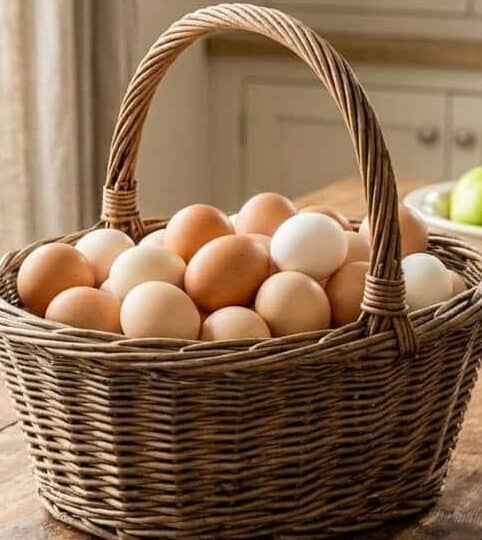
Spring is here and all your hens suddenly decide that laying an egg every day is their goal in life. The countertop bowl fills faster than you can empty it. Friends and neighbors start politely declining another dozen. Breakfast turns into scrambled eggs… again.
If you’ve reached this point, you’ve probably realized that simply eating more eggs isn’t a long-term solution. You need to figure out a way to preserve the eggs.
Then comes the overwhelming part.
Search online and you’ll find dozens of opinions. One person insists water glassing is the only “traditional” egg preservation method worth using. Another freezes hundreds of eggs every year. Someone else swears by powdered eggs for emergency storage.
They’re all right… but they’re all wrong as well. How can that be?
The truth is that there isn’t one perfect egg preservation method. The best way to preserve eggs depends entirely on how you plan to use them later.
This guide compares the three most practical options for home cooks and homesteaders so you can choose the method that fits your kitchen, your storage space, and your cooking habits. See 21 Easy Ideas to Use Your Egg Abundance for ideas on how to use eggs fresh, before preserving the remainder.
A Quick Comparison
| Method | Shelf Life | Best For | Texture After Storage | Equipment Needed |
| Freezing | About 1 year | Everyday baking and cooking | Nearly identical once cooked | Freezer |
| Water Glassing | 12 to 18 months | Long-term storage of fresh unwashed eggs | Very close to fresh | Food-grade bucket and pickling lime |
| Dehydrating | Several years when properly stored | Emergency storage, camping, lightweight pantry staples | Reconstituted for cooking and baking | Dehydrator or freeze dryer |
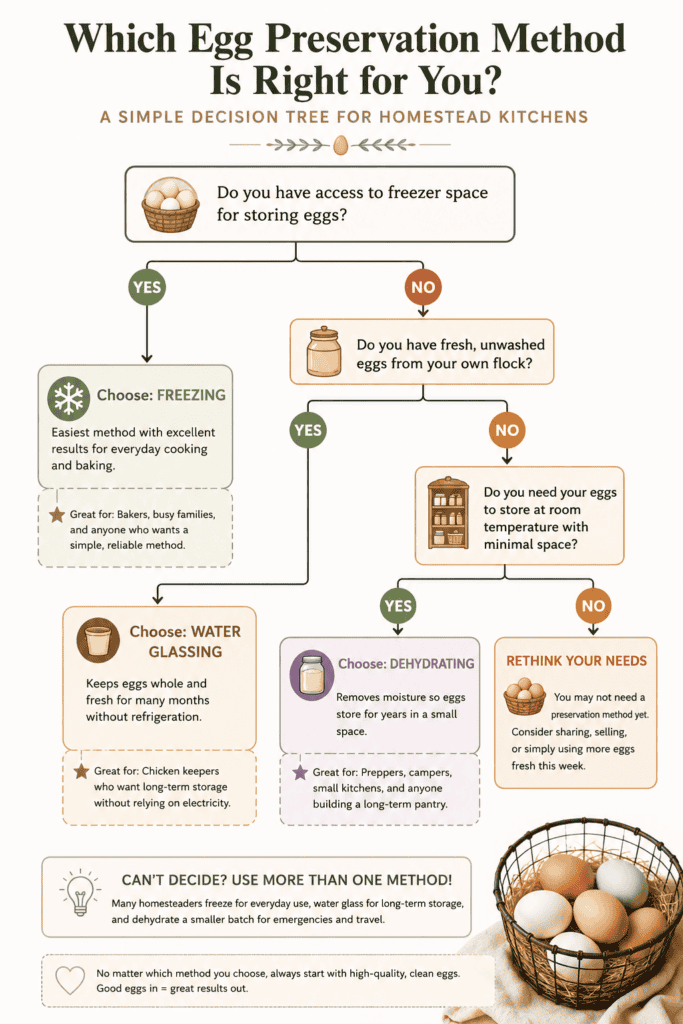
If you only read one section, here’s the takeaway:
Freezing is the easiest.
Water glassing stores the longest while keeping eggs whole.
Dehydrating saves the most space.
Now let’s look at each method more closely.
Method 1: Freezing Eggs
For most households, freezing is the simplest and most reliable preservation method.
Unlike some preservation techniques that require special ingredients or equipment, freezing asks very little of you. Crack the eggs, mix them gently, portion them, and freeze.
That’s it.
Frozen eggs perform remarkably well in baked goods, casseroles, pancakes, muffins, cookies, quiches, and scrambled eggs. In many recipes, you won’t notice any difference at all.
Pros
- Fast and beginner friendly
- No special ingredients required
- Excellent quality for baking
- Easy to portion
- Works with eggs of any size
Cons
- Requires freezer space
- Dependent on electricity
- Eggs must be removed from their shells first
- Not ideal for serving fried or poached
- If not slightly scrambled the yolks will be rubbery when thawed
Best For
Choose freezing if:
- You bake regularly.
- You already have extra freezer space.
- You want the least complicated method.
- You use eggs every week.
If your freezer is already packed with garden produce, meat, or frozen fruit, however, another option may make more sense.
Method 2: Water Glassing Eggs
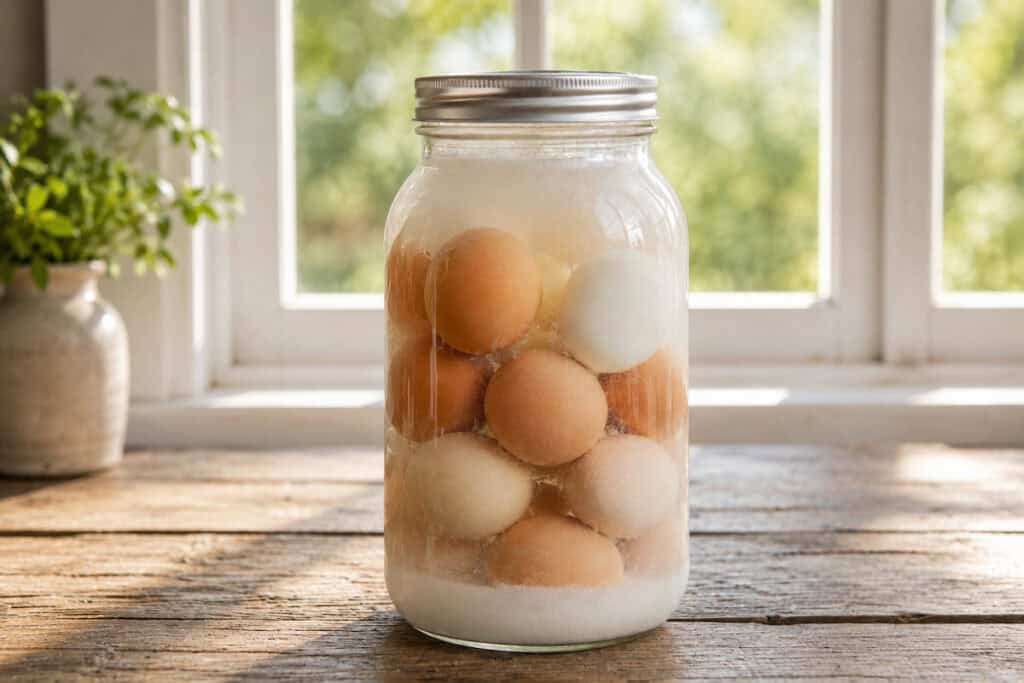
Water glassing has experienced a huge resurgence among homesteaders, and for good reason.
When done correctly, it allows clean, unwashed fresh eggs with their natural bloom intact to remain usable for many months.
Instead of freezing the eggs, you’re protecting them from air exposure while keeping the shell intact.
The biggest advantage?
No electricity.
If your goal is building pantry resilience, there really aren’t any other methods that compete with it.
However, there are important limitations.
Water glassing only works with very fresh eggs that have never been washed. Store-bought eggs won’t work because the protective bloom has already been removed.
You’ll also want healthy hens producing clean eggs. Dirty eggs shouldn’t be scrubbed before water glassing because washing removes the bloom that makes the method possible. You also don’t want to water glass dirty eggs or the dirt will contaminate the water solution.
Pros
- Excellent long-term storage
- No freezer required
- Eggs remain whole
- Great for food security
- Traditional, well-tested method
Cons
- Requires fresh, unwashed eggs
- Not suitable for store-bought eggs
- Some recipes may reveal slight texture differences
- Requires careful storage conditions
Best For
Water glassing is an excellent choice if:
- You keep backyard chickens.
- Your flock produces more eggs than you can freeze.
- You want to reduce dependence on electricity.
- You’re building a long-term pantry.
Method 3: Dehydrating Eggs
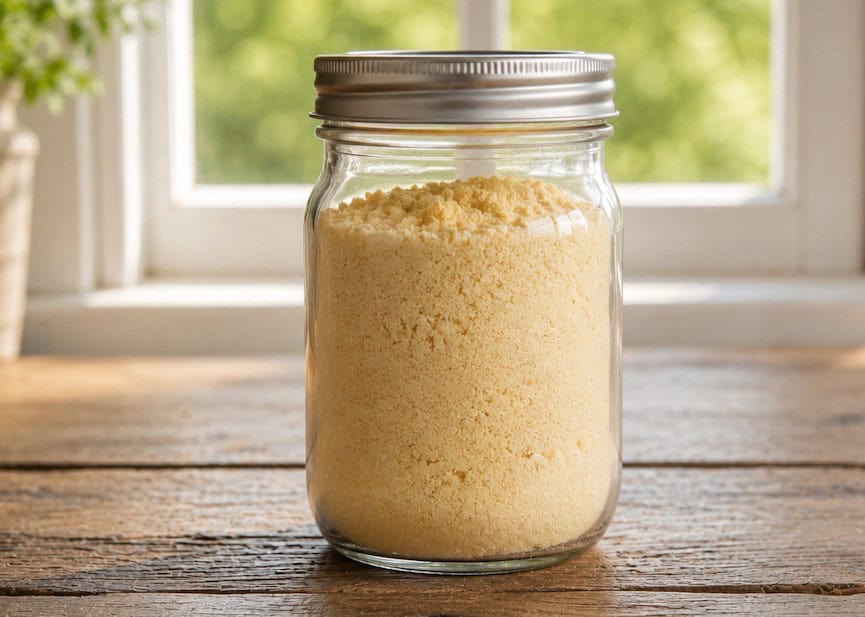
If you don’t have a lot of freezer or pantry space, dehydrated eggs deserve serious consideration.
Removing moisture dramatically reduces both weight and storage space.
A single jar of powdered eggs can replace dozens of fresh eggs while taking up very little room.
Rehydrated eggs work especially well in:
- breads
- pancakes
- muffins
- cookies
- cakes
- casseroles
- camping meals
Many people are surprised by how well powdered eggs bake.
Where they tend to disappoint is fried eggs or recipes where the egg itself is the star. The texture and taste of the eggs do change, so these are best used when they are structural or compliment components to a dish.
Pros
- Extremely compact
- Long shelf life
- Great emergency food
- Easy to transport
- Excellent for baking
Cons
- Additional processing required
- Flavor changes slightly
- Not ideal for every recipe
- Requires proper storage to maximize shelf life
Freeze Drying
Freeze drying deserves an honorable mention here because it is becoming more popular in home kitchens despite the high cost of the freeze drying equipment.
If you have a freeze dryer, then this is an excellent way to preserve eggs. It takes up very little storage space, just like dehydrating. All the pros are the same as dehydrating, with a few extra.
Freeze dried eggs work great in most recipes that do not need the egg in whole form. It won’t work for poached eggs, hard boiled eggs, etc.
Pros
- Extremely compact
- Long shelf life
- Great emergency food
- Easy to transport
- Excellent for baking
- With proper storage they can last more than 20 years
- Taste is very close to fresh eggs
Cons
- Additional processing required
- Not ideal for every recipe
- Requires proper storage to maximize shelf life
Best For
Choose dehydrating (or freeze drying if applicable) if you:
- Have very limited freezer space.
- Want lightweight food storage.
- Enjoy preparedness and emergency planning.
- Bake frequently.
Which Method Produces the Best Baking Results?
Since baking is where many preserved eggs eventually end up, it’s worth comparing them specifically.
Cakes
Frozen eggs perform almost identically to fresh.
Water-glassed eggs generally perform very well, although extremely delicate sponge cakes may show minor differences.
Dehydrated eggs work surprisingly well in sturdy cakes and quick breads, but isn’t great for more delicate desserts.
Cookies
All three methods produce excellent cookies.
Texture differences are almost impossible to notice.
Muffins and Quick Breads
Again, all three methods shine here.
These recipes are forgiving, making them excellent choices for preserved eggs.
Custards and Delicate Egg Dishes
Fresh eggs still come out ahead.
Water-glassed eggs usually perform better than frozen or dehydrated for recipes where eggs provide most of the structure. However, you may still see some decline in the quality of custard when using water glass vs. fresh eggs.
Common Mistakes to Avoid
No preservation method is foolproof. Most disappointing results come from simple mistakes rather than the method itself. This is where choosing your method important.
Freezing
- Freezing eggs in their shells
- Forgetting to label containers
- Using oversized portions that require thawing more than needed
- Not lightly scrambling the eggs before freezing
Water Glassing
- Washing eggs before storage
- Using older eggs
- Using cracked eggs
- Storing containers where temperatures fluctuate dramatically
Dehydrating
- Not drying eggs completely
- Packaging before they’re fully cooled
- Allowing moisture into storage containers
- Assuming homemade dehydrated eggs are identical to commercial freeze-dried products
Avoiding these mistakes dramatically improves your results.
So… Which Egg Preservation Method Should You Choose?
If you’re still undecided, here’s a simple guide.
Choose freezing if…
You bake every week, have freezer space, and want the easiest solution.
Choose water glassing if…
You have backyard chickens and want reliable long-term storage without relying on electricity.
Choose dehydrating if…
Space is limited and you’re building a pantry that can store eggs for months or years in a very small footprint.
Many experienced homesteaders don’t choose just one method. In fact, I would encourage you to do multiple methods.
Many of us with abundant eggs freeze enough eggs for everyday baking, keep a bucket of water-glassed eggs for long-term storage and winter use, and dehydrate a smaller batch for emergency supplies.
That combination gives them flexibility while spreading the risk across multiple storage methods. If one method fails – maybe your freezer door opens and everything thaws before you realize it (yep, just happened to me!) Or maybe your jar of dehydrated eggs gets a bit of moisture when you open it and it starts to mold.
Things happen, none of us have absolutely perfect spaces. Having your eggs preserved through different methods will help you lose your entire stash should something unexpected happen.
Don’t Forget Egg Safety
Regardless of which preservation method you choose, always start with high-quality eggs.
Discard any eggs that are cracked, leaking, or questionable before preserving them. And do not use dirty eggs for water glassing.
When using preserved eggs, cook them thoroughly unless you’re following a tested recipe specifically intended for another use.
Food preservation works best when quality ingredients go into storage in the first place. It’s no different than if you were canning your garden produce for storage.
Picked Your Method and Now Ready to Learn the Details?
Choosing an egg preservation method is only the first step.
Each technique has small details that make a big difference in safety, quality, and shelf life. From choosing the right containers to understanding how long preserved eggs actually last, those details can mean the difference between success and disappointment.
If you’re ready to preserve your spring egg surplus with confidence, be sure to read How to Preserve Fresh Eggs: A Complete Guide to Freezing, Water Glassing, and Dehydrating, where I walk through each method step by step with detailed instructions, troubleshooting tips, storage timelines, and printable reference charts you can keep in your kitchen.
Whether you decide to freeze, water glass, or dehydrate your eggs, the important thing is choosing a method that fits your home and your routine. Once you have a system in place, a basket overflowing with fresh eggs starts to feel less like a problem and more like one of the best rewards of keeping chickens.
For more ideas on how to use excess eggs, read the first part of this series Have To Many Eggs? 21 Easy Ideas to Use Your Egg Abundance.
For more information on raising your own backyard chickens and collecting your own abundance of eggs, read this Beginner’s Guide to Raising Backyard Chickens.