How to Freeze Produce for Baking So You Can Bake With Your Garden All Year
When you learn how to freeze produce for baking the summer harvest and trips to the farmers market tend to look a little different. Bulk buying becomes a priority with the thought of summer comfort in the middle of winter.
There is something deeply satisfying about pulling a bag of summer berries or shredded zucchini out of the freezer in the middle of winter and turning it into something warm from the oven.
That is one of my favorite parts of growing a garden and baking with a garden harvest.
When you grow your own food, the harvest doesn’t have to end when the garden does. Freezing produce specifically for baking gives you a simple way to carry those summer flavors into muffins, quick breads, cakes, pies, crisps, bars, and other baked goods months after the plants have stopped producing.
But there is a trick to it.
You don’t want to freeze produce exactly the same way you would freeze it for eating fresh.
Baking is much more forgiving of changes in texture, which makes the freezer an excellent place for fruit and vegetables that would be less appealing after thawing. Strawberries will become soft and mushy. Zucchini releases lots of water. Raspberries can lose their structure.
In a muffin, cake, or quick bread, however, those changes aren’t necessarily a problem.
In fact, with the right preparation, frozen garden produce can be almost as useful as fresh.
Why Freeze Produce for Baking Specifically?
Freezing is one of the easiest ways to preserve a garden surplus, especially when you don’t want to spend an entire weekend canning. Or when it’s so hot you can’t imagine adding more heat to the house.
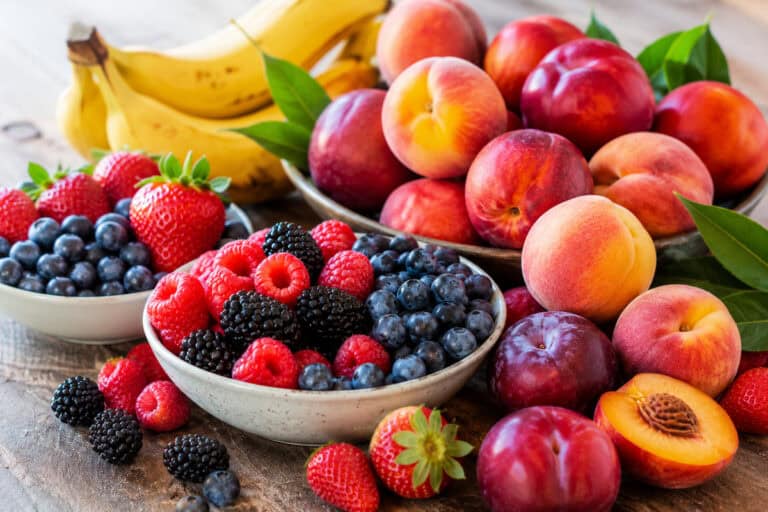
Instead of looking at a freezer full of zucchini, blueberries, raspberries, or peaches as preserved produce, think of it as your future baking pantry.
You can freeze:
- Blueberries for muffins, cakes, and crisps
- Raspberries for cakes, bars, and scones
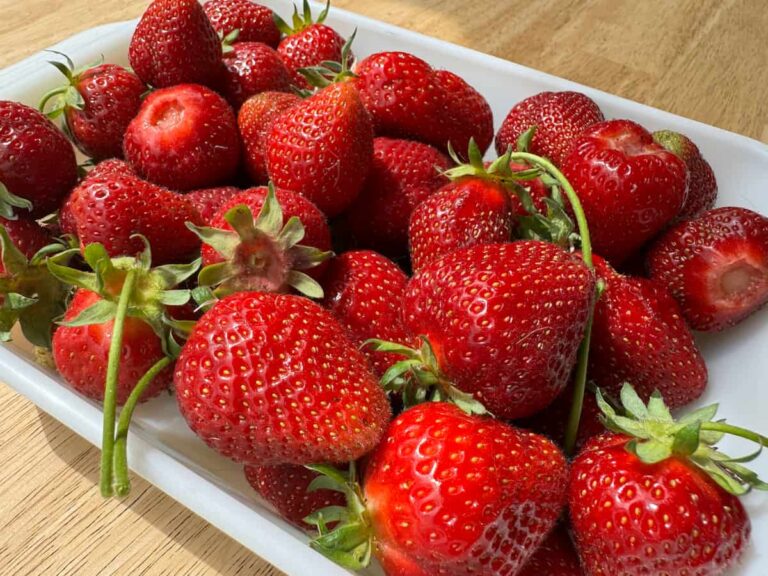
- Strawberries for muffins, quick breads, and sauces
- Cherries for pies, cobblers, and cakes
- Peaches for pies, crisps, and quick breads
- Plums for cakes and crumbles
- Zucchini for breads, muffins, and cakes
- Yellow squash for quick breads and savory baking
- Rhubarb for pies, bars, muffins, and crisps
Frozen fruit works especially well in baked recipes because the oven takes care of many of the texture changes caused by freezing.
The same principle applies to zucchini. Freezing breaks down some of the vegetable’s cell structure, which can leave it watery and soft after thawing. That sounds like a problem, but baked goods are actually one of the best places to use frozen zucchini.
I love baking with frozen produce. In fact, when I learned how to properly freeze produce for baking it was a complete game changer for me.
The Most Important Rule: Freeze Produce With Its Future Recipe in Mind
Before you put anything in the freezer, ask yourself:
What am I going to bake with this?
That one question can save you a surprising amount of work later if you can answer it.
If you know your favorite zucchini bread uses 2 cups of shredded zucchini, freeze your zucchini in 2-cup portions.
If you usually make blueberry muffins with 1½ cups of berries, freeze some bags in 1½-cup portions.
If your favorite pie uses 4 cups of peaches, freeze a 4-cup batch.
You are essentially doing part of the recipe preparation now.
That means January-you still get to reap the rewards of all the hard work you put into the summer garden and orchard.
How to Freeze Most Berries for Baking
Blueberries, raspberries, blackberries, strawberries, and other berries are some of the easiest fruits to freeze for baking.
The basic method is simple:
- Sort through the berries and remove damaged or overripe fruit.
- Briefly soak blackberries and raspberries in water to remove any bugs in the berries.
- Gently rise the rest if needed.
- Dry them extremely well.
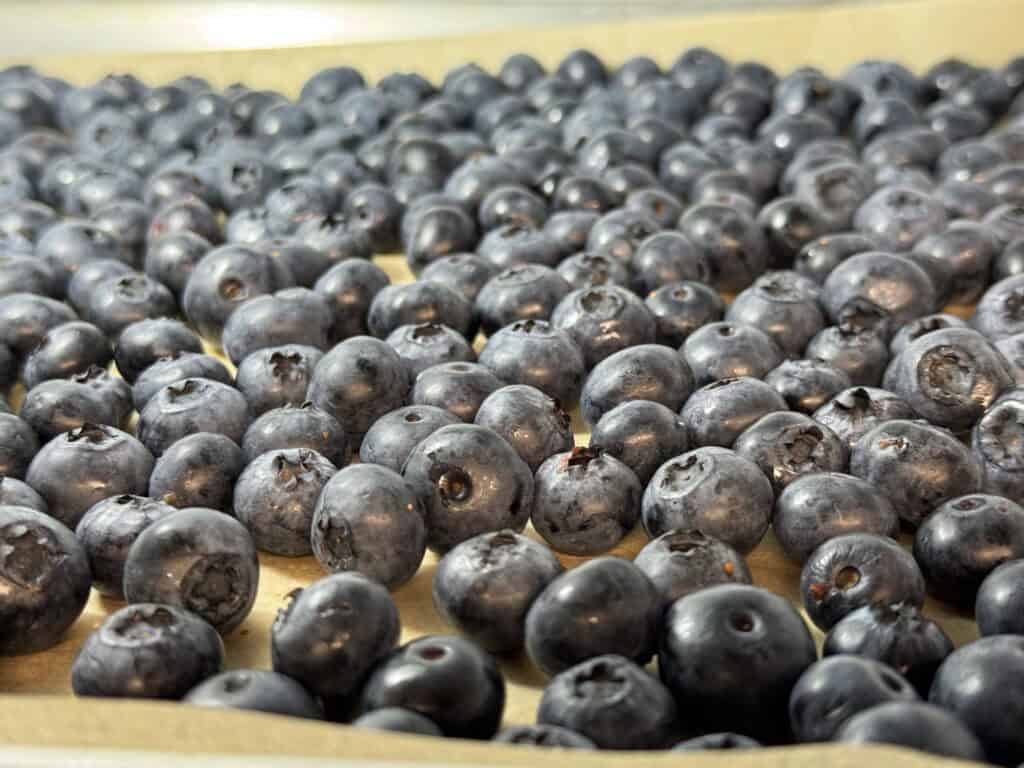
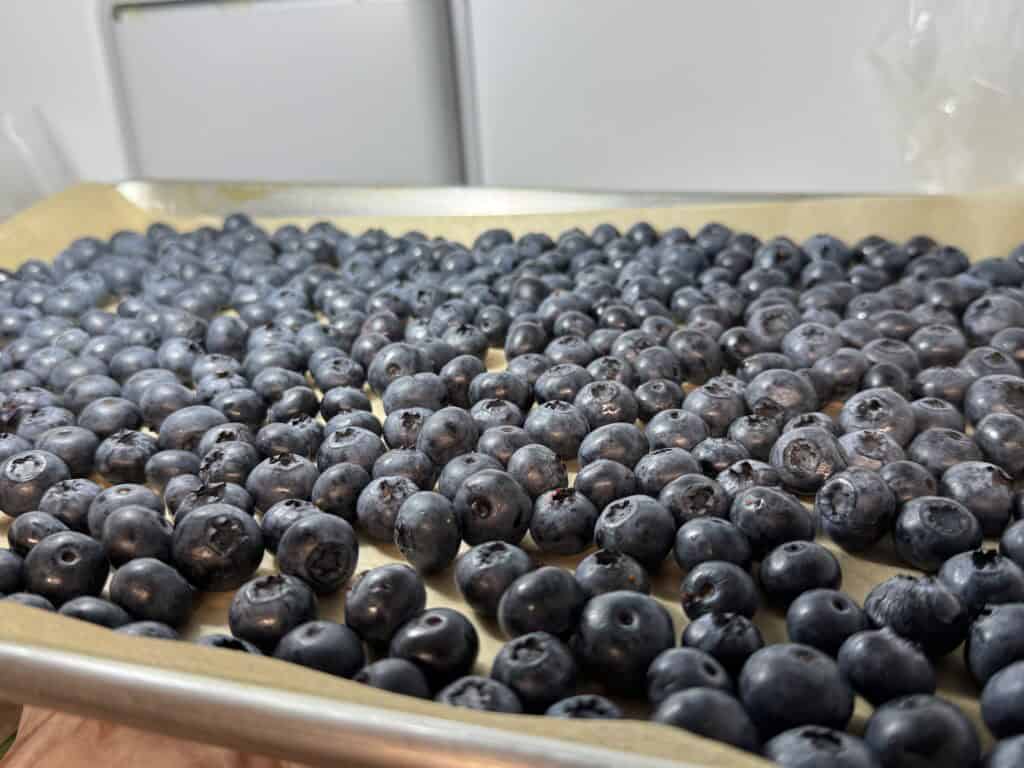
- Spread the berries in a single layer on a parchment-lined baking sheet.
- Freeze until solid. This is called flash freezing.
- Transfer the frozen berries to freezer-safe bags or containers.
- Label with the type of fruit, amount, and date.
The drying step is more important than it looks.
Moisture is the enemy of good frozen berries.
Extra water freezes onto the berries and creates larger ice crystals, which can contribute to more texture loss. After I rinse or soak, I lay them out on some paper towels or clean kitchen towels to dry for a couple hours.
Should You Freeze Berries Individually?
Yes. I would say the only exception is if you are planning to heat them in a pot for a sauce. But even then, you would need them perfectly portioned before freezing.
Freezing them individually on a baking sheet first keeps them from becoming one giant berry brick. Giant berry bricks are almost impossible to separate and measure out properly. It’s one ex
Once they’re frozen solid, transfer them to a freezer bag and remove as much air as possible.
Then you can scoop out exactly what you need.
Do You Thaw Frozen Berries Before Baking?
Usually, no.
For muffins, quick breads, cakes, scones, and similar baked goods, frozen berries can generally go directly into the batter.
In fact, keeping delicate berries frozen can help prevent them from breaking apart while you’re mixing.
One exception is a recipe with a very short baking time or one where the amount of liquid needs to be carefully controlled. In those cases, thawing and draining may be helpful.
Frozen fruit is particularly well suited to baked recipes, although the additional juice released during baking sometimes means a recipe needs a little extra thickener.
A Tip for Blueberries
If you’re making something like blueberry muffins, toss the frozen berries with a small amount of flour before folding them into the batter.
This helps distribute them through the batter instead of having them all sink toward the bottom.
And don’t thaw them first unless the recipe specifically calls for it.
How to Freeze Strawberries for Baking
Strawberries require a little more attention because they contain so much water.
Frozen strawberries will not retain the firm, juicy texture of fresh strawberries.
That’s okay.
You’re not freezing them for a fruit salad.
You’re freezing them for strawberry muffins, cakes, quick breads, compotes, sauces, and other baked recipes.
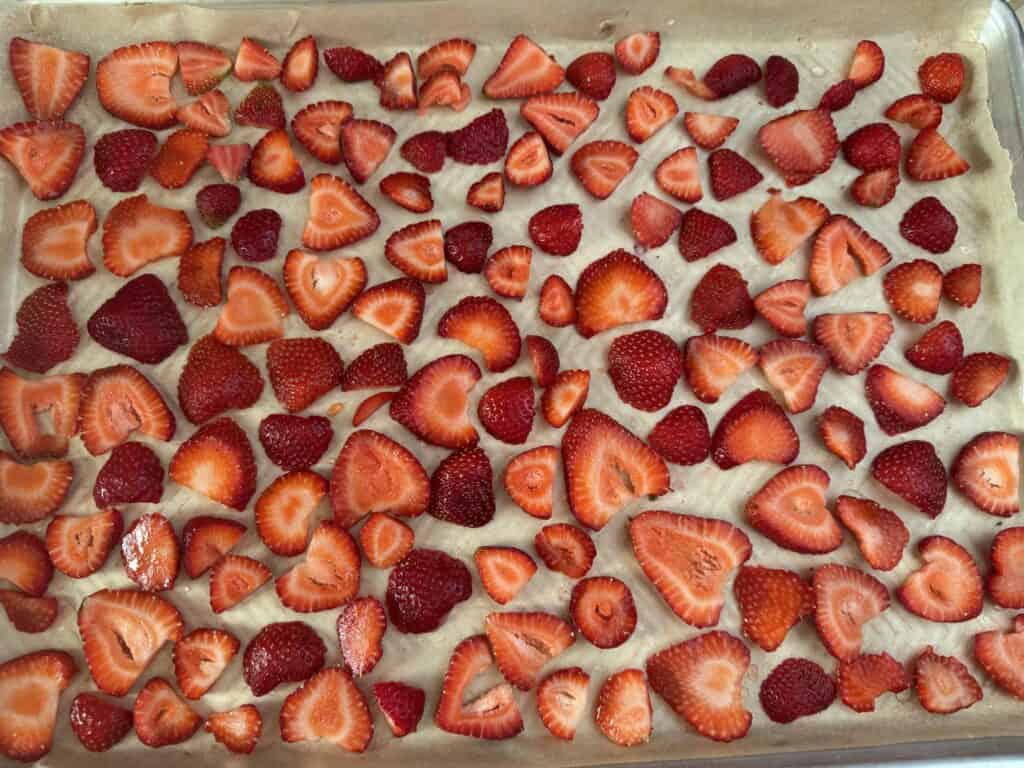
For baking, I prefer slicing or chopping strawberries before freezing.
Spread them in a single layer on a parchment-lined baking sheet and freeze until solid.
Once frozen, transfer them to a freezer bag.
When you’re ready to bake, use them frozen if the recipe allows.
For recipes where excess moisture could cause a problem, thaw the strawberries first and drain off the accumulated liquid. They will be mushy, but will still add good flavor to your recipe.
How to Freeze Raspberries and Blackberries
Raspberries and blackberries are delicate, so handle them as little as possible.
Don’t pile them into a container while they’re still wet.
Instead:
- Sort them
- Soak for a short time to remove any bugs
- Dry thoroughly
- Freeze in a single layer
- Transfer to an airtight freezer container
Expect some berries to become soft after thawing.
That doesn’t mean they have gone bad.
It simply means freezing has changed their cellular structure.
They are still excellent candidates for muffins, cakes, crumb bars, pies, sauces, and other baked recipes.
This is actually one of my favorite ways to make the garden harvest last longer. I try to freeze berries every year to enjoy all winter.
How to Freeze Zucchini for Baking
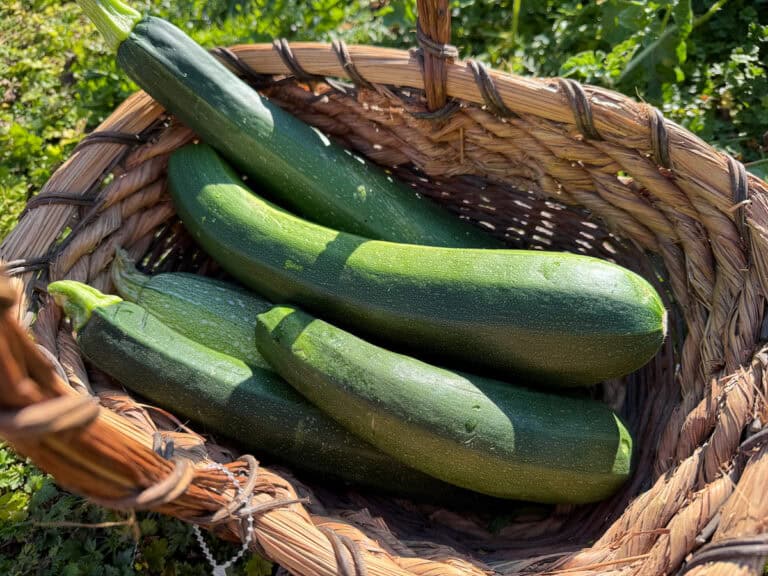
If you grow zucchini, you already know that the plant doesn’t understand how to only give a little.
Fortunately, zucchini freezes beautifully for baking.
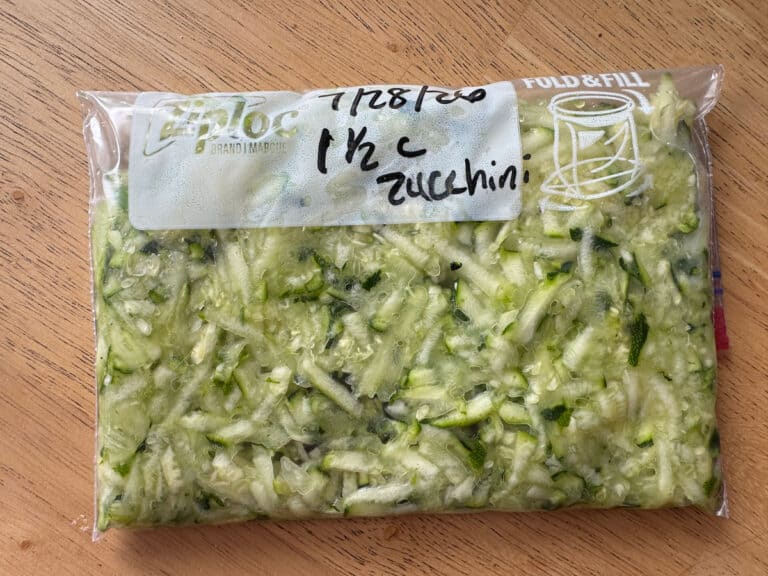
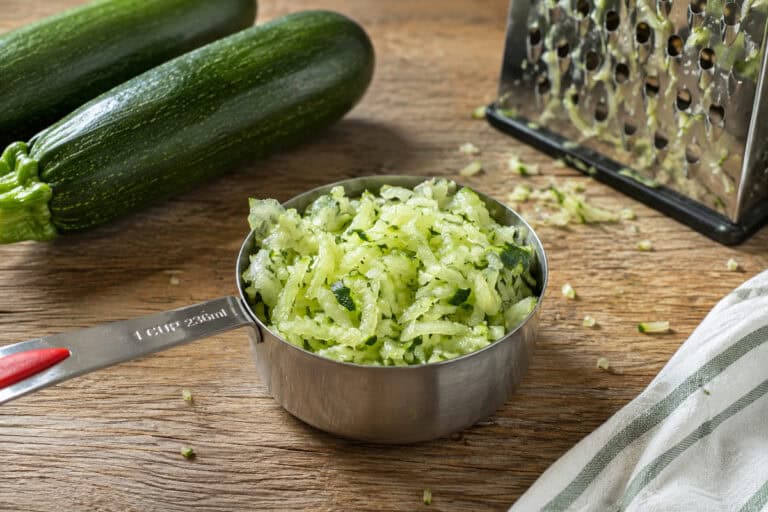
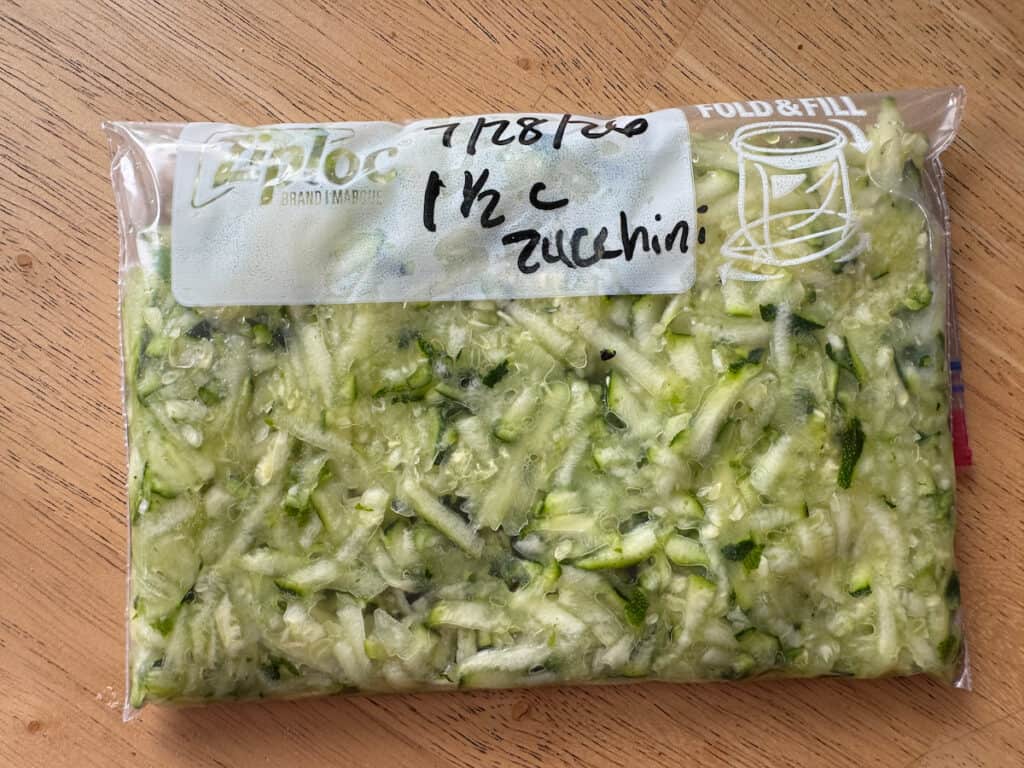
The best way to freeze zucchini for bread, muffins, and cakes is to shred it first.
Wash the zucchini, trim the ends, and shred it using the large holes of a box grater or a food processor.
You don’t need to peel young zucchini.
If you’re dealing with an enormous garden zucchini, however, you may want to remove the large seeds and spongy center first.
For more detailed instructions read How to Freeze Zucchini for Baking.
Should You Squeeze Zucchini Before Freezing?
This is where things get a little more interesting.
If you’re freezing zucchini specifically for baking, I recommend removing some of the excess moisture before freezing rather than squeezing it completely dry.
You want to remove the excess water, but you don’t necessarily want to turn your zucchini into dry little green threads.
When the zucchini thaws, it will release additional liquid. Drain that liquid before adding the zucchini to your batter.
For a deeper look at when you should and shouldn’t squeeze zucchini, see my guide on Why You Should Squeeze Water From Zucchini (and When You Shouldn’t).
And if you’re harvesting enough zucchini to make this a recurring problem, this guide on How to Successfully Grow Summer Squash in Small Spaces has some useful tips for keeping your harvest coming without letting the squash get completely out of hand.
How to Portion Frozen Zucchini
This is one place where measuring before freezing makes a huge difference.
I recommend freezing zucchini in:
- 1-cup portions
- 2-cup portions
- Whatever amount your favorite recipes regularly use
Flatten the bags before freezing so they stack neatly.
And write the amount on the bag.
Trust me.
Can You Freeze Yellow Squash for Baking?
Yes.
Yellow summer squash can be treated similarly to zucchini when you’re planning to use it in baked recipes.
Shred it and portion it for things like:
- Quick breads
- Muffins
- Cakes
- Savory biscuits
- Casseroles
If you’re freezing yellow squash for other uses, such as sautéing or roasting, blanching is generally recommended. This helps it hold its structure a little better.
But for baking, the important thing is to think about the finished recipe rather than trying to preserve the squash’s original fresh texture.
How to Freeze Peaches for Baking
Peaches are fantastic freezer candidates for pies, crisps, cobblers, muffins, and cakes.
Start with ripe but firm peaches.
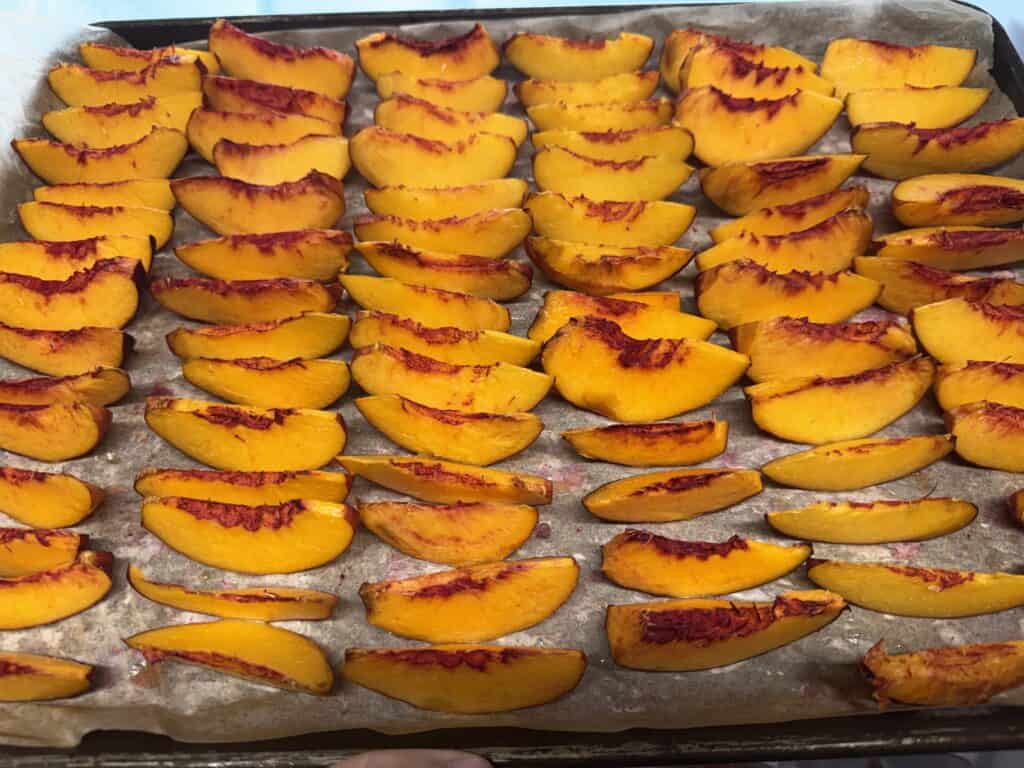
Peel if desired, remove the pits, and slice. I always peel, I’m not a fan of the peach fuzz.
I flash freeze peaches in slices, or diced pieces. If you’re the proactive type (news flash: I am not) it’s great to portion them out, just like with the zucchini.
For example:
4 cups sliced peaches = one cobbler or crisp.
If you’re freezing a large amount of peaches, you can also treat them with an appropriate anti-browning method before freezing. This is often lemon juice or a citric acid, but to be honest I typically skip this. For us busy folks, it’s an extra step that there isn’t always time for.
When you’re ready to bake, peaches can often be used directly from frozen.
Some recipes may need additional thickening because frozen fruit releases more juice during baking.
How to Freeze Cherries for Baking
Cherries are another fruit that becomes extremely useful once you’ve done the prep work ahead of time. And forewarning, the prep work is time consuming but completely worth it.
Wash, stem, and pit the cherries.
Then flash freeze them in a single layer on a parchment-lined baking sheet.
Once solid, transfer them to freezer bags or containers.
I recommend labeling the bag with:
Sweet cherries | pitted |August 2026
Because future-you will appreciate knowing exactly what is hiding in that freezer and when it was put in there.
Frozen cherries are wonderful for:
- Cherry pies
- Cherry crumb bars
- Coffee cakes
- Muffins
- Cakes
- Crisps
- Sauces
What About Rhubarb?
Rhubarb is one of the easiest garden crops to freeze for baking.
Wash and chop the stalks into the size you normally use for recipes. Pre-chopping is really important as you will not be able to chop the stalks if frozen whole.
Spread them on a baking sheet and freeze until solid.
Then transfer to freezer bags.
You can freeze rhubarb by itself or combine it with fruit, although I generally prefer freezing it alone.
This gives me more flexibility later.
You can turn that same bag of rhubarb into a strawberry-rhubarb pie one day and a rhubarb crumb bar the next.
Should You Freeze Fruit With Sugar?
Usually, if you’re freezing fruit specifically for baking, I recommend freezing them without added sugar.
It gives you much more flexibility.
You can always add sugar later according to the recipe you’re making.
Sugar-packed fruit can be useful for certain applications, but if you’re trying to build a freezer full of versatile baking ingredients, plain frozen fruit is usually the better option.
The Best Way to Package Produce for Baking
Packaging matters almost as much as preparation.
Your goal is to prevent:
- Freezer burn
- Excess air
- Moisture loss
- Mystery bags
- Huge frozen blocks of produce
I like freezer bags for most baking produce because they can be flattened and stacked.
If you freeze large quantities every year, a vacuum sealer can also be useful. I have used a Food Saver for years and love it.
For smaller quantities, good-quality freezer bags and a baking sheet are enough.
And if you’re freezing a lot of berries individually, a sturdy half-sheet baking pan makes the flash-freezing step much easier.
*As an Amazon Associate, I may earn from qualifying purchases at no additional cost to you.
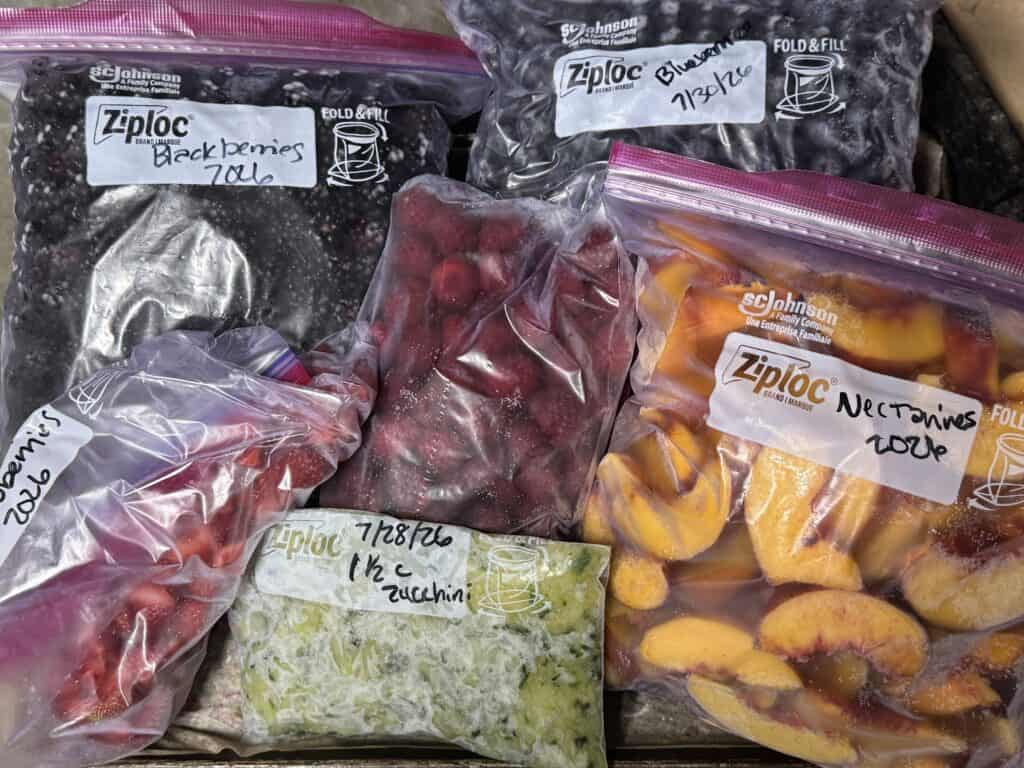
Label Everything
Please don’t skip this.
Frozen produce can become surprisingly difficult to identify after a few months.
Every package should have, at the very least:
What it is + date
If it’s something you’ve portioned out, include the amount on the package as well.
For example:
Blueberries
2 cups
August 2026
Or:
Shredded zucchini
2 cups squeezed
August 2026
Add the intended use if you know:
Blueberries | 2 cups | muffins | August 2026
Future-you will be really appreciate this.
How Long Can Frozen Produce Be Stored?
Freezing keeps food safe indefinitely when it remains continuously frozen, but quality gradually declines over time.
For the best baking quality, I prefer to use most garden produce within 6-9 months of when it was harvested.
That way you’re eating last summer’s harvest before the next summer’s harvest arrives. It’s also being used before there’s been time for nutrient loss.
My Favorite Produce to Freeze for Baking
If you have limited freezer space, I wouldn’t try to freeze everything.
I’d prioritize the produce that gives you the biggest baking payoff.
1. Blueberries
One of the easiest fruits to freeze and one of the most versatile.
Perfect for:
- Muffins
- Quick breads
- Cakes
- Scones
- Crisps
2. Zucchini
An absolute freezer workhorse.
Perfect for:
- Zucchini bread
- Muffins
- Cakes
- Brownies
- Biscuits
You can also freeze this flat, so it takes up a lot less space than other produce.
3. Raspberries
These are especially useful for:
- Cakes
- Crumb bars
- Muffins
- Scones
- Sauces
4. Cherries
A little more prep work, but absolutely worth it.
5. Peaches
Especially good for pies, crisps, cobblers, and quick breads.
6. Rhubarb
An incredibly useful freezer ingredient because it pairs with so many different fruits.
A Simple Garden-to-Bakery Freezer System
If you’re growing a garden specifically so you can bake with your harvest, here’s the system I use. Hopefully you will find it useful as well.
During Harvest
Pick produce at peak quality. If you’re not sure when that is, this post on When to Harvest Vegetables for Best Flavor may be helpful for vegetables. It doesn’t talk much about fruit.
Don’t wait until fruit is past its prime simply because you’re planning to freeze it.
During Prep
Clean and prepare the produce for its eventual recipe.
Don’t just throw whole vegetables into freezer bags.
Shred zucchini.
Pit cherries.
Slice peaches.
Hull strawberries. Slice or dice if preferred (I prefer diced).
Before Freezing
Measure the produce into useful portions if it’s something that is not being flash frozen (such as zucchini). Freezing other produce in portion sizes is also very useful if you can plan ahead.
Think about your recipes.
If your favorite muffin recipe uses 1½ cups of berries, freeze some bags in that amount.
Freeze
Flash-freeze loose fruit and berries on a parchment-lined baking sheet when appropriate.
Then transfer everything into labeled freezer bags or containers.
When You’re Ready to Bake
Take out exactly what you need.
Use frozen fruit directly unless your recipe says otherwise.
Thaw and drain moisture from frozen zucchini.
Thaw and drain fruit when a particular recipe requires it.
Then bake.
That’s it.