Have Too Many Eggs? 21 Easy Ideas To Use Your Egg Abundance
If you raise backyard chickens, you know how egg abundance changes with the seasons. Winter come, daylight disappears, and suddenly you’re surprised if you find any eggs in the box. You check the nesting boxes every few days, hoping to find something. Maybe you find one lonely egg or, on some days, none at all. It can be a frustrating time of year when it comes to egg production.
Then spring arrives.
The days get longer and the hens start kicking into high gear. Before long you have too many eggs and are carrying full egg baskets back to the house every afternoon, wondering how four or five birds could possibly be producing this many eggs. Or if chicken math got you, 8-10 or even more hens. At my peak, I had 19 hens! And only a family of 3!
I filled carton after carton, then just baskets.
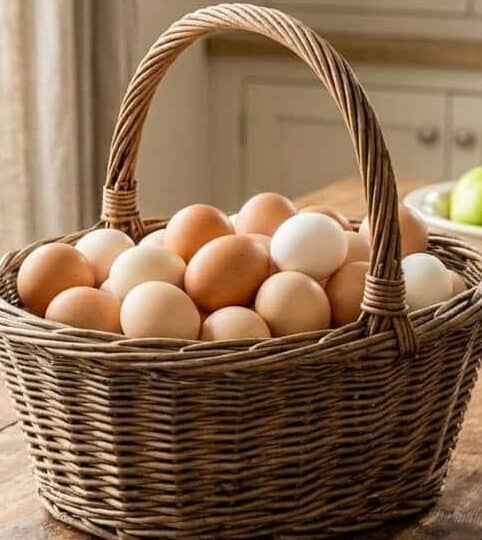
Pretty soon I had my neighbor constantly stocked with eggs. I was convincing relatives to “just take a dozen,” and trying to work eggs into every meal you cook. Breakfasts became dutch babies and other options using 5-6 eggs at a time. If you’ve ever found yourself wondering, What am I supposed to do with all these eggs? you’re in very good company. That’s the question I was asking myself.
A healthy laying hen can produce 250 to 300 eggs a year, with production heavily concentrated during spring and early summer. Some breeds will lay less, but even the ones that produce 200 eggs a year will catch up with you. A modest backyard flock can easily produce far more eggs than a family can reasonably eat fresh. My mother-in-law had 4 hens and was still giving eggs away because she had too many.
If you want to get backyard chickens and want to learn more check out A Beginner’s Guide to Raising Backyard Chickens.
The good news? Extra eggs are a wonderful problem to have. I didn’t recognize that at first, until I learned what to do with them.
Whether your goal is reducing food waste, stretching your grocery budget, or building a more resilient pantry, there are dozens of ways to put every egg your flock produces to good use.
Let’s start with the easiest options.
Eat More Eggs (Without Getting Tired of Them)
If your egg surplus only lasts a few weeks, simply eating more eggs may be enough.
Here are several ways to work them into your weekly menu.
1. Make a Family-Size Frittata
If you have too many eggs, a large frittata easily uses eight to ten eggs and is one of the easiest weeknight dinners you can make. Add leftover vegetables, herbs from the garden, cooked potatoes, sausage, or cheese and you’ve cleaned out both your refrigerator and your egg basket.
Better yet, leftovers reheat beautifully for breakfast.
2. Bake a Deep-Dish Quiche
Quiche freezes surprisingly well and makes an excellent make-ahead meal.
One quiche typically uses six to eight eggs, and you can vary the fillings endlessly depending on what’s coming out of your garden.
3. Keep Hard-Boiled Eggs Ready to Go
Hard-boiled eggs are one of the easiest grab-and-go snacks you can keep on hand.
They’re perfect for quick breakfasts, packed lunches, protein snacks, or slicing onto salads.
4. Make Deviled Eggs
Do you have too many eggs that need to disappear in one afternoon?
Invite people over and easily use a dozen.
Deviled eggs have an almost magical ability to vanish from serving trays. We have them at every family gathering.
5. Prepare Egg Salad
A large batch of egg salad can use a dozen eggs and provides several easy lunches throughout the week. It is easily one of my favorite summer sandwiches.
Try mixing in fresh dill, chives, curry powder, bacon, or avocado for something different so you don’t feel like you’re eating the same salad over and over.
6. Bake Egg-Rich Desserts
Some desserts practically exist to use eggs.
Consider making:
- Pound cake
- Angel food cake
- Chiffon cake
- Custard
- Pastry cream
- Homemade pudding
- Ice cream base
- Meringue
- Curd
These recipes often call for anywhere from six to twelve eggs depending on how much you make.
7. Make Homemade Pasta
Fresh pasta is one of those projects many people never think about until they have too many eggs.
The rich dough freezes well, tastes incredible, and uses several eggs at once. You can even make large batches, let them dry, and have homemade pasta ready to go whenever you want it.
You can watch this video on How to Make Pasta for Step-By-Step instructions.
8. Make Breakfast Sandwiches for the Freezer
Cook a large batch of eggs and assemble breakfast sandwiches for busy mornings. I also like to make a large batch of breakfast burritos I can quickly grab before heading to work.
You’ll use a surprising number of eggs while saving yourself time later.
Share the Abundance
Sometimes the best solution isn’t storing more eggs.
It’s letting someone else enjoy them.
9. Give Eggs to Friends and Family
Fresh backyard eggs are a gift almost everyone appreciates. I try to keep my neighbor in stock. And it’s a good way to show how much I appreciate all the help he has provided for us over the years with his tractor.
You’ll probably find people who happily accept a dozen every week during peak laying season. Pop them up on your local Facebook Buy Nothing page and they’ll be gone in no time!
10. Surprise Your Neighbors
One of my favorite parts of keeping chickens is sharing the abundance.
A carton of fresh eggs left on a neighbor’s porch has a funny way of turning into conversations, friendships, and the occasional returned favor.
11. Donate to Local Food Pantries
Many food banks welcome fresh eggs, although policies vary.
Call first to learn what your local organization accepts.
12. Trade with Other Homesteaders
Eggs make excellent barter currency.
Many homesteaders happily trade produce, honey, maple syrup, sourdough bread, homemade soap, or canned goods for a dozen fresh eggs.
13. Sell Your Extra Eggs
Depending on your state and local regulations, selling eggs can help offset feed costs.
Even modest sales can cover bedding, oyster shell, or part of your monthly feed bill. I’ve sold some of my eggs to my local community to help cover costs. This can be harder depending on how many people are selling, though. If your market is saturated, you may not sell as many. But that doesn’t mean you shouldn’t try!
Always check your local laws before selling eggs.
Preserve Eggs for Later
Eventually, every chicken keeper reaches the point where eating and sharing simply aren’t enough. I did all of this and still had several dozen eggs left at times.
That’s where preservation became a game changer for me.
Instead of scrambling to use eggs before they pile up, you’re intentionally moving today’s abundance into the pantry (or freezer) for later when your hens are not as productive.
There isn’t one perfect preservation method.
Each has strengths, weaknesses, ideal storage times, and best uses in the kitchen. The best preservation method is going to be the one that works for you.
14. Refrigerate Them Properly
Fresh, unwashed eggs naturally have a protective bloom that helps keep bacteria out.
When stored correctly, they stay fresh much longer than many people realize. They can last a couple months, at least, in the fridge if stored correctly.
Simply understanding proper storage can buy you valuable time before deciding what to do next.
15. Freeze Whole Eggs
Freezing works extremely well for baking.
However, there are a few tricks that make a huge difference in texture after thawing.
Many first-time preservers skip these steps and end up disappointed.
16. Freeze Egg Yolks
Extra yolks are common after making angel food cake or meringue.
Properly preparing yolks before freezing keeps them usable instead of turning rubbery.
17. Freeze Egg Whites
Egg whites freeze beautifully and thaw with very little quality loss.
They’re perfect for macarons, meringues, and baking projects later.
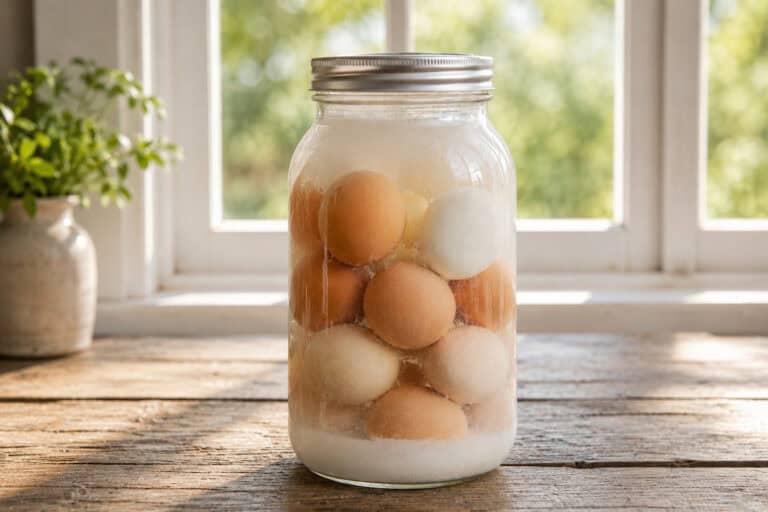
18. Water Glass Fresh Eggs
Water glassing has exploded in popularity over the past few years. I feel like I see a different social media post about it every week.
It’s an old preservation technique that allows properly prepared fresh eggs to remain usable for months without refrigeration.
It isn’t difficult, but there are a few critical details that determine whether it succeeds or fails.
19. Dehydrate or Freeze Dry Eggs
Powdered eggs are compact, shelf stable, and especially useful if freezer space is limited.
Many people are surprised by how useful they are for baking, camping, and emergency food storage.
Dehydrators are more accessible to the average person, but if you own a freeze dryer it’s an excellent way to preserve eggs. Dehydrators can change the taste of eggs some, but freeze dryer eggs tend to rehydrate and taste almost the same as fresh eggs.
I don’t have a freeze dryer, so it’s not an option for me to do personally unless I get my friend to do it for me with hers. I do have a dehydrator, though, and that works remarkably well.
20. Pickle Eggs
Pickled eggs probably won’t solve a huge surplus by themselves, but they’re a fun way to preserve a dozen or two while adding something completely different to your pantry.
You can come up with all different kinds of flavor combinations so you never get bored.
Think About Next Spring
21. Make a Plan Before the Eggs Arrive
This might be the most valuable tip on the entire list.
Every spring follows roughly the same pattern. If you know abundance is coming, you can prepare ahead.
That might mean buying freezer containers in winter.
Maybe it’s setting aside pantry space for preservation supplies and jars of water glassed eggs.
It could be planning several egg-heavy meals during the heaviest laying times of the year.
Or maybe it’s deciding ahead of time which preservation method you’ll rely on this year instead of scrambling to learn while your refrigerator is overflowing.
A little planning transforms egg season from overwhelming into enjoyable.
Why Preservation Changes Everything
Eating more eggs helps.
Sharing with neighbors helps.
Selling a few dozen helps.
But if your flock consistently produces more eggs than your household can use, those solutions only delay the inevitable.
Preservation is what actually breaks the cycle.
Instead of racing against the calendar, you create a pantry that works with the natural rhythm of your flock. Spring abundance becomes winter breakfasts. Summer baking becomes holiday desserts. Eggs collected today become ingredients you’ll still be using months from now.
The challenge is that preservation isn’t one-size-fits-all.
Water glassing isn’t always the best choice. Freezing isn’t ideal for every kitchen. Dehydrating and freeze drying require different equipment and produce different results. Even refrigeration has best practices that many backyard chicken keepers haven’t always been taught.
Choosing the wrong method can waste time, ingredients, and sometimes an entire batch of eggs.
That’s why the next article in this series walks through the major preservation methods side by side, explaining how each one works, where it shines, and which kitchens they’re best suited for. By the end, you’ll have a much clearer idea of which approach fits your goals.
And if you’re the kind of person who likes having everything in one place, I’m also putting together a complete guide that covers every preservation method in detail, common mistakes to avoid, food safety considerations, storage timelines, and practical ways to cook with preserved eggs once you’ve stocked your pantry.
Because the goal isn’t just saving eggs.
It’s making sure every egg your hens work so hard to lay eventually finds its way onto your family’s table.