Easy Homemade Golden Raspberry Jam (No Pectin Needed)
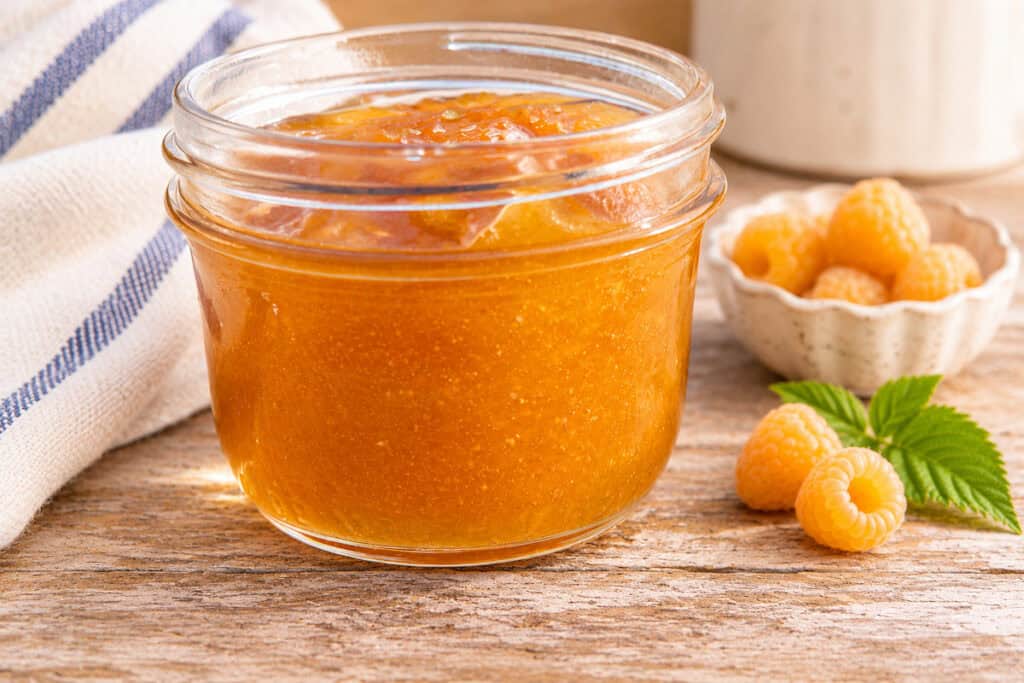
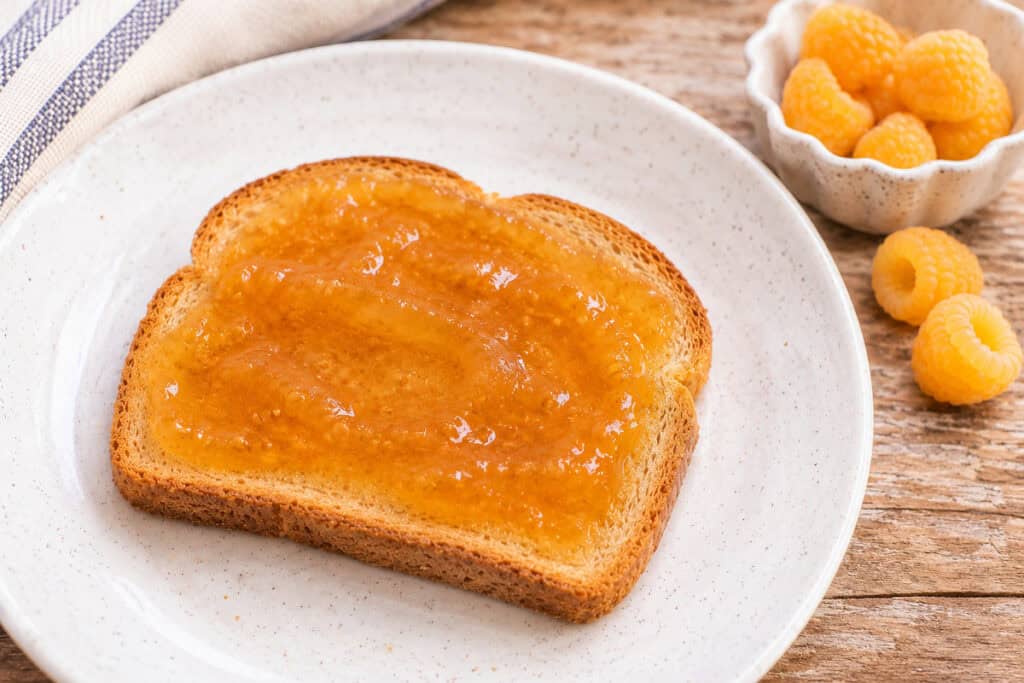
There is something particularly lovely about turning a bowl of golden raspberries into a jar of homemade jam. Especially fresh picked ones during the summer. Their delicate sweetness and beautiful golden color make a preserve that feels a little more special than traditional raspberry jam.
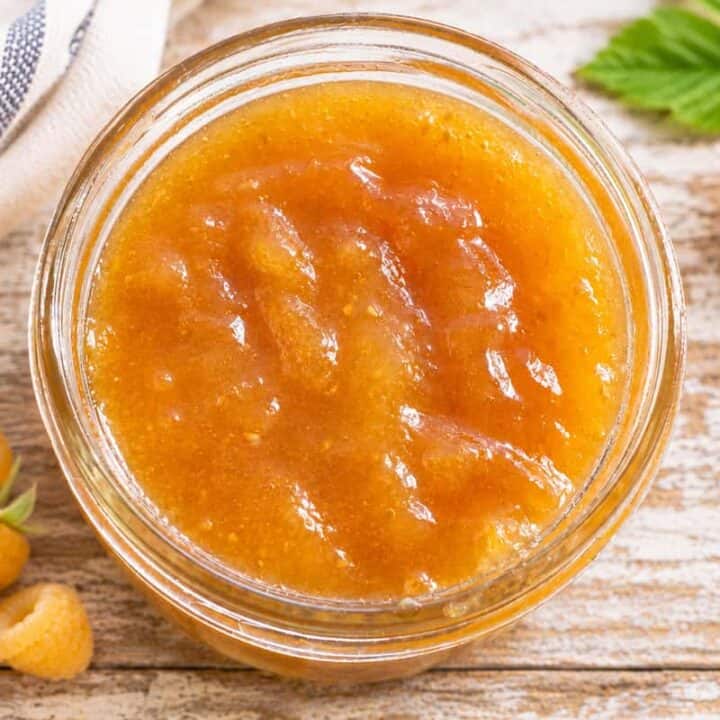
This homemade golden raspberry jam is smooth, seedless, and made without commercial pectin. A little lemon juice brightens the berry flavor, while vanilla adds a subtle warmth that makes this jam especially delicious.
You can make this jam with fresh or frozen golden raspberries. It’s a beautiful homemade spread ready for your biscuits, toast, scones, pastries, and a wide variety of other treats.
If you’ve been looking for something a little different to do with your golden raspberry harvest, this recipe is a wonderful place to start.
Why You’ll Love This Golden Raspberry Jam
- No commercial pectin: The jam relies on the fruit’s natural pectin and concentration through cooking.
- Smooth and seedless: Straining the berries creates a silky consistency without the little seeds found in traditional raspberry preserves.
- Beautiful natural color: Golden raspberries produce a gorgeous amber-gold jam.
- Small-batch recipe: You don’t need pounds and pounds of berries to make a batch.
- Perfect for baking: Use it in thumbprint cookies, pastry fillings, cakes, and homemade breakfast treats.
- Fresh or frozen berries: You can make this recipe during raspberry season or pull frozen berries from the freezer.
Ingredients For Golden Raspberry Jam
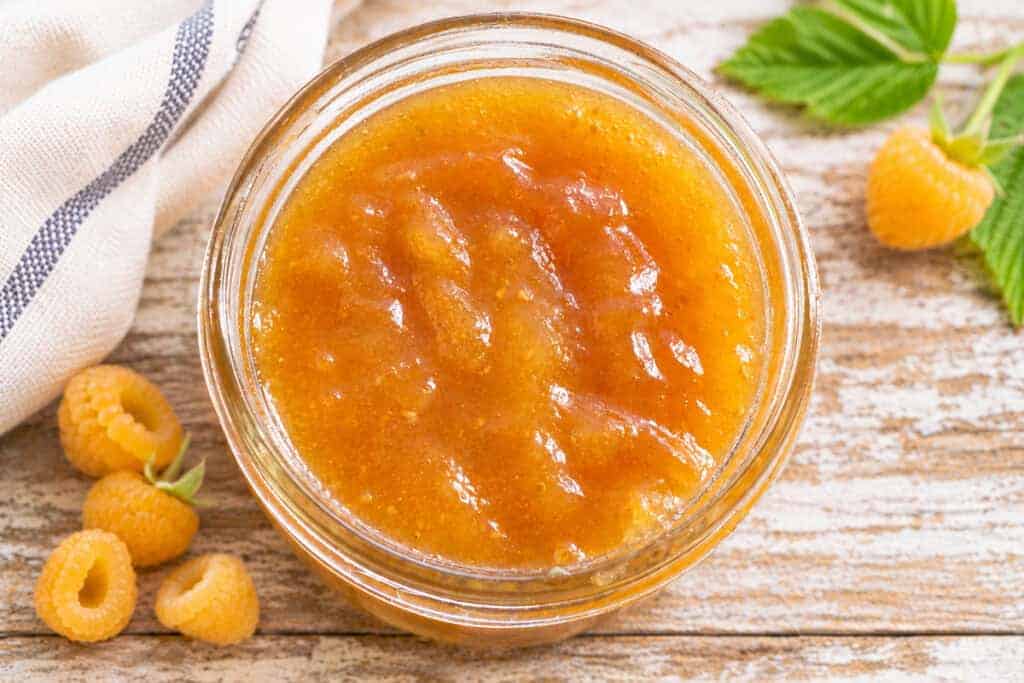
- 700 g (5 1/2-6 cups) fresh golden raspberries
- 250 g (1¼ cups) granulated sugar
- 15 g (1 tablespoon) lemon juice
- 5 g (1 teaspoon) vanilla bean paste
- 0.5 g (small pinch) fine sea salt
Golden raspberries: Fresh golden raspberries are perfect for this recipe, but frozen berries work just as well. If using frozen berries, thaw them first and include the juices the berries release while thawing.
Granulated sugar: Sugar sweetens the berries and contributes to the jam’s consistency.
Lemon juice: A little lemon juice brightens the flavor and contributes acidity to the recipe. It helps balance the sweetness without making the finished jam taste lemony.
Vanilla bean paste (or extract): Vanilla gives the finished jam a lovely bakery-style flavor without overshining the golden raspberry flavor. You can substitute pure vanilla extract if you don’t have vanilla bean paste.
Fine sea salt: Just a small pinch helps balance the sweetness and bring out the raspberry flavor.
Weigh your ingredients for the most accurate measurements. A basic kitchen scale is perfect. Standard measurements are listed as well, but they are approximate.
*As an Amazon Associate I may earn from qualifying purchases at no cost to you.
How to Make Golden Raspberry Jam
Step 1: Soften the raspberries
Add the golden raspberries to a heavy-bottomed saucepan over medium-low heat.
Cook for approximately 5–8 minutes, gently crushing the berries as they soften. They will begin releasing their juices and breaking down into a loose fruit mixture.
You don’t need to completely puree them at this stage. The goal is simply to soften the fruit enough to make straining easier.
You can also use a gentle heat to help thaw frozen berries. Frozen berries will break down as they thaw.
Step 2: Remove the seeds
Place a fine-mesh sieve over a large bowl.
Pour the softened raspberry mixture into the sieve and use a silicone spatula or the back of a spoon to press the fruit through.
Work in small batches if necessary. Scrape the underside of the sieve occasionally to collect the smooth raspberry pulp.
Don’t force the seeds through the mesh. Taking your time here will give you a much smoother finished jam.
Discard the seeds and measure the strained pulp. You should have approximately 350–375 g (1 ½ cups) of smooth raspberry pulp. If your yield differs, adjust the sugar proportionally, using approximately 70% of the pulp weight (total weight x 0.7 = final weight of sugar needed).
Step 3: Combine the ingredients
Return the strained raspberry pulp to a clean saucepan.
Add the granulated sugar, lemon juice, and salt. Stir until everything is thoroughly combined.
Allow the mixture to sit for approximately 5 minutes while the sugar begins dissolving.
Step 4: Cook the jam
Place the saucepan over medium heat and stir frequently until the sugar has dissolved.
Bring the mixture to a steady boil, then reduce the heat slightly to maintain a controlled boil.
Continue cooking for approximately 15–25 minutes, stirring frequently to prevent scorching.
As the water evaporates, the mixture will become thicker and more concentrated.
Because this recipe doesn’t use commercial pectin, the final consistency depends on the natural pectin in the fruit, the amount of moisture in the berries, and how far the mixture is reduced.
Step 5: Test the consistency
There are two ways to check whether your jam has reached the correct consistency.
The temperature test: At sea level, traditional jam commonly reaches its setting point around 220°F (104°C). Use a candy thermometer and account for your elevation.
National Center for Home Food Preservation at the University of Georgia has a very helpful guide on Testing Jelly Without Added Pectin.
The chilled plate test: Place a small plate in the freezer before you begin cooking. When you think the jam is ready, place a small spoonful on the chilled plate. Allow it to cool for approximately 30 seconds, then gently push it with your finger.
The jam should be moderately thick and not immediately run back together as your finger runs through it.
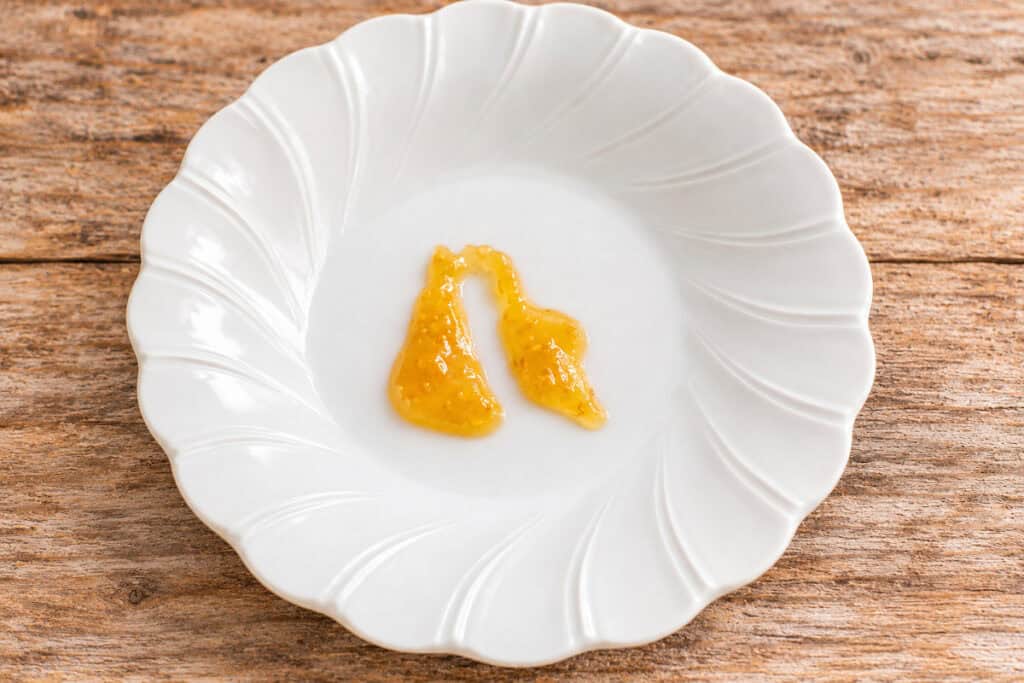
Remember that refrigerator jam will continue to thicken as it cools. Don’t cook it until it becomes overly stiff in the saucepan or you’ll have a brick once it’s completely cooled down.
Step 6: Add the vanilla
Remove the saucepan from the heat.
Stir in the vanilla bean paste or extract until evenly distributed.
Adding the vanilla at the end preserves its delicate aroma and subtle taste
Step 7: Cool and store
Allow the jam to rest for approximately 5 minutes, stirring occasionally.
Transfer it into clean, heat-safe jars or containers, leaving room at the top if you plan to freeze it.
Allow the jam to cool completely, then cover and refrigerate or freeze.
The jam will continue developing its final consistency as it cools.
Tips for Making the Best Golden Raspberry Jam
Don’t skip straining the berries. If you want a truly smooth, seedless jam, take your time pressing the softened berries through a fine-mesh sieve. This is the most important step for achieving the texture we’re after.
Use a heavy-bottomed saucepan. Raspberry jam can scorch as the mixture thickens. A heavy-bottomed pan distributes heat more evenly and makes the cooking process easier to control.
Don’t rush the cooking process. Cooking the jam too quickly can cause scorching before enough moisture has evaporated. A steady boil with frequent stirring gives you better control and a better tasting jam.
Watch the consistency rather than the clock. Cooking times vary depending on the juiciness of the berries, the amount of strained pulp, and the size of your saucepan.
Don’t overcook the jam. It will thicken considerably as it cools. A slightly loose consistency in the saucepan is preferable to an overly firm finished jam.
Add vanilla at the end. This keeps the vanilla flavor delicate and fragrant.
How to Store Homemade Golden Raspberry Jam
This recipe is intended for refrigerator and freezer storage, it is not a tested shelf-stable pantry recipe.
Refrigerator: Store the jam in clean, covered containers and use within approximately 3 weeks.
Freezer: Transfer cooled jam into freezer-safe containers, leaving adequate headspace for expansion. Freeze for 6 months for best quality but it will easily last a year in the freezer.
To use frozen jam, thaw it in the refrigerator and stir before serving.
Ways to Use Golden Raspberry Jam
One of my favorite things about making homemade preserves is finding new ways to use them beyond a simple piece of toast or a morning English muffin.
Golden raspberry jam has a delicate flavor that works particularly well in baked goods.
Here are some of my favorite ideas:
- Homemade biscuits: Spread a generous layer over warm, buttery biscuits.
- Thumbprint cookies: Fill buttery shortbread cookies with a little golden raspberry jam before baking.
- Vanilla popovers: Spoon the jam inside freshly baked popovers or serve alongside them.
- Danish pastries: Use it as a filling for homemade cream cheese danishes.
- Layer cakes: Spread a thin layer between vanilla or almond cake layers.
- Scones: Serve alongside homemade cream scones and whipped butter.
- Star bread: Pair it with pistachios for a beautiful holiday breakfast pastry.
- Cheesecake bars: Swirl a little jam into cheesecake batter before baking.
This jam would pair very well with my Golden Raspberry White Chocolate Bundt Cake.
The vanilla and raspberry combination is especially lovely with almond, pistachio, white chocolate, and buttery pastry.
Frequently Asked Questions
Can I use frozen golden raspberries?
Yes! Frozen golden raspberries work beautifully. Thaw them before cooking, or while very gently heating, and include any juices released during thawing. You may need to adjust the cooking time slightly depending on how much moisture the berries contain.
If you want to make the jam, but don’t have time when you pick the berries, check out my How to Freeze Produce for Baking guide to learn how to properly freeze the berries for jam making once you have the time.
Can I make golden raspberry jam without pectin?
Yes. This recipe uses no commercial pectin. The jam thickens as moisture evaporates and the fruit becomes concentrated. Golden raspberries vary in natural pectin content, so the final set may be softer than a traditional pectin-based jam.
Why do you strain the raspberries before making jam?
Raspberry seeds can make homemade preserves feel gritty, particularly when you want a smooth filling for baked goods. I particularly don’t like it when the seeds stick in my teeth. Straining the softened berries removes the seeds while retaining the fruit pulp and flavor.
Can I use vanilla extract instead of vanilla bean paste?
Absolutely. Substitute 1 teaspoon of pure vanilla extract for the vanilla bean paste. Add it after removing the jam from the heat.
Why is my homemade raspberry jam runny?
The jam may not have cooked long enough to evaporate enough moisture. It may also have a naturally softer set because raspberries vary in their natural pectin content. Remember that refrigerator jam thickens as it cools, so allow it to chill completely before deciding whether it needs further cooking. You can always reheat the cooled jam thicken it more.
Can I reduce the sugar?
Reducing the sugar can change the consistency and keeping quality of homemade jam. I recommend following the recipe as written for the intended refrigerator and freezer storage. Or feel free to experiment knowing that your consistency may be off. Leave a comment with the result if you do!
Is golden raspberry jam different from regular raspberry jam?
Golden raspberries tend to have a softer, sweeter flavor and produce a beautiful golden-amber preserve. The basic cooking method is similar, but the finished jam has a different color and a more delicate flavor profile.
A Little Golden Jar of Summer
Making homemade golden raspberry jam is a lovely way to preserve your harvest. As long as some of the berries actually make it to your kitchen and don’t get eaten immediately!
The smooth texture, delicate berry flavor, and hint of vanilla make it something special to keep in the refrigerator for weekend breakfasts and homemade baking projects.
Whether you spoon it over warm biscuits, tuck it into buttery thumbprint cookies, or use it as a filling for homemade pastries, this little batch of golden raspberry jam brings a bit of summer into the kitchen long after the berries have disappeared from the garden.
Golden Raspberry Jam
This homemade golden raspberry jam is smooth, seedless, and naturally thickened without commercial pectin. Made with fresh golden raspberries, a touch of lemon juice, and vanilla bean paste, it has a beautiful golden-amber color and a delicate, sweet-tart berry flavor.
Ingredients
- 500 g (4 cups) fresh golden raspberries
- 250 g (1¼ cups) granulated sugar
- 15 g (1 tablespoon) lemon juice
- 5 g (1 teaspoon) vanilla bean paste
- 0.5 g (small pinch) fine sea salt
Instructions
- Add golden raspberries to a heavy-bottomed saucepan. Cook over medium-low heat for 5–8 minutes, gently crushing the berries as they soften and release their juices.
- Place a fine-mesh sieve over a large bowl. Press the softened berries through the sieve using a silicone spatula, collecting the smooth pulp and leaving the seeds behind. Discard the seeds.
- Weigh the strained raspberry pulp. Return it to a clean saucepan.
- Add sugar, lemon juice, and salt. Stir until combined and allow to sit for 5 minutes.
- Cook over medium heat until the sugar dissolves. Bring to a steady boil, stirring frequently.
- Continue cooking for approximately 15–25 minutes, or until the jam reaches the desired consistency. Stir frequently to prevent scorching.
- Test the consistency using a chilled plate or thermometer. At sea level, traditional jam setting temperature is approximately 220°F (104°C).
- Remove from heat and stir in vanilla bean paste.
- Allow to rest for 5 minutes, then transfer to clean, heat-safe jars. Cool before covering and refrigerating or freezing.
Notes
- Frozen golden raspberries can be substituted. Thaw before cooking and include their accumulated juices.
- Vanilla extract can replace vanilla bean paste.
- Cooking time varies depending on the moisture content of the berries and the amount of strained pulp.
- The jam will continue to thicken as it cools.
- Refrigerate for approximately 3 weeks or freeze for up to 6 months for best quality.
- Leave headspace in freezer-safe containers to allow for expansion.
- This recipe is not tested for shelf-stable canning. It is recommended that you do not store at room temperature or process in a water-bath canner.
Nutrition Information:
Serving Size: 1 TablespoonAmount Per Serving: Calories: 45Total Fat: 0gSaturated Fat: 0gTrans Fat: 0gUnsaturated Fat: 0gCholesterol: 0mgSodium: 1mgCarbohydrates: 11gFiber: 1gSugar: 10gProtein: 0g