Irresistible Yellow Squash Snickerdoodles: Soft, Chewy Garden-Fresh Cookies
I’ve always thought of yellow squash as a staple side dish. Unlike it’s cousin, the zucchini, I had never thought of baking with it until this year. But when I stopped thinking of squash as a vegetable, and instead thought of it as an ingredient, a whole new world of possibilities opened with this humble squash.
These yellow squash snickerdoodles are soft, tender, buttery cookies with warm cinnamon throughout and a generous coating of cinnamon sugar. The yellow squash adds moisture and tenderness without making the cookies taste like vegetables. They basically disappear into the batter, creating an incredibly moist cookie. Snickerdoodles are my favorite, and I’m so happy to have developed this version that marries my favorite cookie with my love of gardening.
And if you have ever wondered whether yellow squash can actually work in a cookie, the answer is a very definite yes. Give these yellow squash snickerdoodles a try, you won’t regret baking cookies with yellow squash!
Why Bake With Yellow Squash?
Yellow squash has a mild flavor and a high water content, which makes it surprisingly useful in baking.
Much like zucchini, it can add moisture to baked goods without adding a strong vegetable flavor into the dessert. In these cookies, the squash mostly works to create moisture, not add flavor.
You get a tender cookie with a soft center, while the butter, vanilla, cinnamon, and brown sugar provide the flavor you expect from a good snickerdoodle.
This is a great garden squash recipe to keep in your back pocket during peak garden season. When the squash is coming in faster than you can sauté it, shred some for baking instead and give these summer squash cookies a try.
If you’re looking for more ways to use an abundant garden harvest, my fresh garden zucchini ideas are another good place to start.
If you’d like to start growing yellow squash, How to Grow Summer Squash is a great guide to check out. It has tips no matter how big or small your growing space is.

What Do Yellow Squash Snickerdoodles Taste Like?
If you are expecting these cookies to taste like squash, you’re in for a pleasant surprise.
The flavor is primarily buttery, vanilla-rich, warm, and full of cinnamon, with the characteristic slight tang from cream of tartar. It’s everything a good snickerdoodle should be.
The yellow squash contributes moisture and tenderness, not flavor.
There may be tiny flecks of squash visible in the cookies, depending on how finely you grate it, but once baked, the squash blends beautifully into the dough. My family doesn’t even notice it’s there when I make them.
The result is somewhere between a classic snickerdoodle and a soft garden-inspired sugar cookie. Honestly, it’s everything I love in a snickerdoodle.
Ingredients For Yellow Squash Snickerdoodles
Cookies
- ¾ cup (170 g) unsalted butter, softened
- ½ cup (100 g) granulated sugar
- ½ cup (100 g) packed light brown sugar
- 1 large egg, room temperature
- 2 teaspoons vanilla extract
- ½ cup finely grated squeezed yellow squash
- 2 cups (250 g) all-purpose flour
- 1 teaspoon cream of tartar
- ½ teaspoon baking soda
- ½ teaspoon fine salt
- ½ teaspoon ground cinnamon
- ⅛ teaspoon ground nutmeg
Cinnamon-Sugar Coating
- ¼ cup (50 g) granulated sugar
- 1½ teaspoons ground cinnamon
The Secret to Good Yellow Squash Cookies
There is one step you really should not skip: squeezing the squash.
Yellow squash contains a lot of water. If you add freshly grated squash directly to the cookie dough, that extra moisture can throw off the texture.
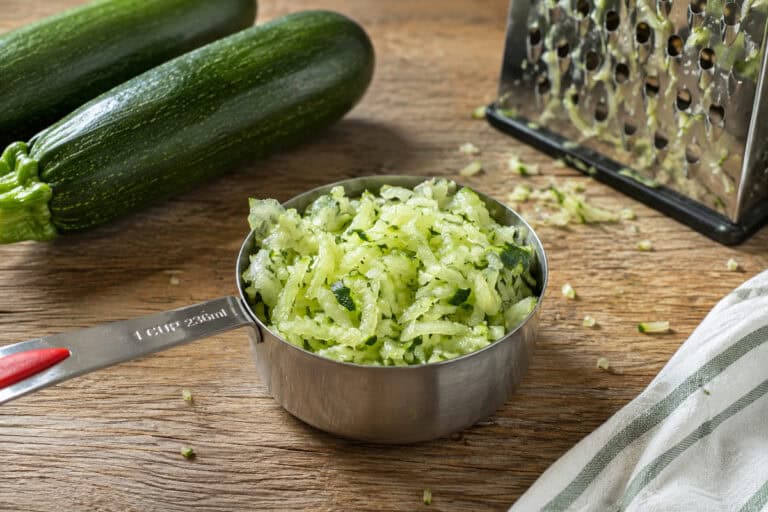
Instead, finely grate the squash and squeeze it well before measuring.
You don’t need to turn it into a completely dry mass. You simply want to remove the excess liquid that would otherwise make the dough too wet.
This small step makes a big difference. For more instructions on how to squeeze water from squash, see my guide Why You Should Squeeze Water from Zucchini. The same principles work for yellow squash.
Don’t throw away the squash liquid
You can save the liquid you squeeze from the squash for another use. Add it to a soup, smoothie, savory sauce, or even a batch of bread dough.
It’s got a lot of really great vitamins and minerals in it. Try not to let it go to waste.
When you’re cooking from the garden, there is usually more value hiding in the things that tend to get discarded than we realize.
Why These Cookies Use Cream of Tartar
Cream of tartar is one of the defining ingredients in a traditional snickerdoodle.
It gives the cookies their characteristic subtle tang and works with the baking soda to help them rise.
Without it, you can still make a cinnamon-sugar cookie, but you lose some of what makes a snickerdoodle taste like a snickerdoodle.
That’s especially important in this recipe because we’re already changing the traditional cookie by adding yellow squash. Keeping the classic snickerdoodle elements helps the finished cookie remain recognizable.
How to Prepare the Yellow Squash
For this recipe, use a small to medium yellow squash with tender skin.
Wash and dry the squash, then finely grate it. You do not need to peel it.
Place the grated squash in a clean kitchen towel or several layers of cheesecloth and squeeze firmly over the sink or a bowl.
Measure the squash after squeezing. This is important. There are times you want to measure before, but this is not one of them. How to Measure Zucchini for Baking goes into more detail if you’d like to learn more.
You want ½ cup of squeezed, finely grated yellow squash for the recipe.
If you’re working with a particularly large garden squash, check the seeds first. Very mature squash can have larger, tougher seeds and a firmer interior. Those squash are better suited to other recipes and will not work great for this one.

Making the Cookie Dough
Start by creaming softened butter with both granulated and brown sugar.
The combination of sugars is intentional. Granulated sugar helps give the cookies their classic sweetness and contributes to the exterior, while brown sugar adds moisture, depth, and chewiness.
Beat the butter and sugars until they are light and creamy, then add the egg and vanilla.
The squeezed yellow squash goes in next.
At this point, the mixture may look a little unusual. That’s perfectly fine.
Whisk the flour, cream of tartar, baking soda, salt, cinnamon, and nutmeg separately before adding them to the wet ingredients.
Mix just until the flour disappears.
Overmixing cookie dough can develop too much gluten, which makes the finished cookies tougher. Once the dough comes together, stop mixing.
Why Chill the Dough?
These cookies benefit from a short chill in the refrigerator.
The yellow squash adds moisture to the dough, and chilling gives the flour time to absorb some of that moisture while firming up the butter.
That helps the cookies maintain their shape instead of spreading too aggressively in the oven.
You only need about 30 to 45 minutes.
You can use that time to line your baking sheets, mix the cinnamon sugar, or, if you’re anything like me during garden season, go figure out what to do with the next basket of squash sitting on the counter. I’m always planning something!
The Cinnamon-Sugar Coating
This is one of the best parts of the snickerdoodle.
Mix granulated sugar with ground cinnamon and roll each portion of chilled dough generously in the mixture.
Don’t be stingy here.
That cinnamon-sugar coating gives the cookies their characteristic crackled, slightly crisp exterior while the inside stays soft.
For the most traditional flavor, stick with cinnamon and sugar. If you want to experiment, a tiny pinch of cardamom in the coating is lovely with yellow squash, but it is completely optional.
I prefer the classic version for this recipe because I’m a sucker for the cinnamon-sugar coating. Cardamom is great, but to me it’s better served in something like my Orange Cardamom Zucchini Muffins.
How to Know When They’re Done
Bake the cookies at 350°F for 10 to 12 minutes.
The edges should be set, while the centers should still look slightly soft.
Don’t wait for the entire cookie to look completely baked before pulling them from the oven.
They will continue cooking from the residual heat of the baking sheet as they cool.
For a soft, bakery-style cookie, this is especially important. An extra couple of minutes in the oven can be the difference between a tender center and a firmer, tougher, cookie.
Let them sit on the baking sheet for about five minutes before transferring them to a cooling rack.

Can You Freeze Yellow Squash Snickerdoodles?
Yes. You have two good options.
Freeze the baked cookies
Let the cookies cool completely, then place them in an airtight freezer-safe container.
They can be frozen for about two months.
Thaw them at room temperature.
Freeze the cookie dough
I actually prefer this method when I know I won’t bake the whole batch at once.
Scoop the dough into individual portions, roll each one in the cinnamon sugar, and freeze the dough balls in a single layer until firm.
Transfer them to a freezer-safe container or bag.
When you’re ready to bake, place the frozen dough balls directly on a parchment-lined baking sheet and bake at 350°F, adding a few extra minutes to the baking time.
This gives you fresh cookies without having to make another batch of dough. I love making a double batch of dough and freezing half of it. When you want something sweet, but need it to be a quick dessert, popping a couple cookie balls into the oven for 15 minutes is perfect.

A Garden-to-Bakery Cookie Worth Making
I love recipes like this because it was the start of how I changed the way I looked at how to use summer squash.
Yellow squash recipes are often savory, and that’s the only way I thought of it for years.
But yellow squash doesn’t have to stay in the savory category. Once you start thinking about what its moisture and mild flavor can do in baked goods, there are plenty of possibilities.
These yellow squash snickerdoodles are an easy place to start.
They’re familiar enough that nobody needs convincing to try one. In fact, if you don’t tell anyone they’re a summer squash cookie, no one will probably even know. They’ll just ask how you got them to be so tender inside.
And that’s exactly what I like from a garden-to-bakery recipe.
Take the harvest you have too much of and turn it into something people are genuinely excited to eat. Be honest, who usually gets excited about fresh yellow squash recipes? Now I can honestly say I do, and you will too after trying these!

Yellow Squash Snickerdoodle Cookies
Soft, tender snickerdoodle cookies made with finely grated yellow squash and coated in buttery cinnamon sugar. The squash adds moisture without overpowering the classic cinnamon-vanilla flavor, making these a delicious way to use an abundant summer garden harvest.
Ingredients
- ¾ cup (170 g) unsalted butter, softened
- ½ cup (100 g) granulated sugar
- ½ cup (100 g) packed light brown sugar
- 1 large egg, room temperature
- 2 teaspoons vanilla extract
- ½ cup finely grated yellow squash, squeezed well
- 2 cups (250 g) all-purpose flour
- 1 teaspoon cream of tartar
- ½ teaspoon baking soda
- ½ teaspoon fine sea salt
- ½ teaspoon ground cinnamon
- ⅛ teaspoon ground nutmeg
- For the Cinnamon-Sugar Coating
- ¼ cup (50 g) granulated sugar
- 1½ teaspoons ground cinnamon
Instructions
- Prepare the squash. Finely grate the yellow squash. Place it in a clean kitchen towel or several layers of cheesecloth and squeeze firmly to remove excess moisture. Measure ½ cup of the squeezed squash and set aside.
- Cream the butter and sugars. In the bowl of a stand mixer fitted with the paddle attachment, beat the softened butter, granulated sugar, and brown sugar on medium speed for 2–3 minutes, until light and creamy.
- Add the wet ingredients. Beat in the egg and vanilla until fully incorporated. Add the squeezed yellow squash and mix just until evenly distributed.
- Combine the dry ingredients. In a separate bowl, whisk together the flour, cream of tartar, baking soda, salt, cinnamon, and nutmeg.
- Make the dough. With the mixer on low, gradually add the dry ingredients to the butter mixture. Mix just until no dry streaks remain. Do not overmix.
- Chill. Cover the dough and refrigerate for 30–45 minutes. This helps the cookies hold their shape and prevents excessive spreading.
- Prepare the coating. Stir together the granulated sugar and cinnamon in a small bowl.
- Shape the cookies. Scoop the chilled dough into approximately 2-tablespoon portions and roll each portion into a smooth ball. Roll generously in the cinnamon-sugar mixture, making sure each cookie is thoroughly coated.
- Bake. Arrange the cookies on parchment-lined baking sheets, leaving about 2 inches between each cookie. Bake at 350°F for 10–12 minutes, until the edges are set and lightly golden while the centers still look slightly soft.
- Cool. Let the cookies cool on the baking sheet for 5 minutes before transferring them to a wire rack. The centers will continue to set as they cool.
Notes
Squeezing the squash: Yellow squash contains a lot of water, so don't skip this step. The squash should be moist but not dripping wet after squeezing. Removing too much moisture isn't necessary either. A little moisture is what gives these cookies their tender center.
Don't overbake: These cookies should look slightly underdone in the center when they come out of the oven. Baking until the centers look completely set will produce a firmer, less tender cookie.
For the best cinnamon-sugar crust: Roll the dough generously in the cinnamon sugar. That coating is what gives these cookies their classic snickerdoodle character and creates the crackly exterior as they bake.
Storage: Store cooled cookies in an airtight container at room temperature for up to 4 days. For longer storage, freeze the baked cookies for up to 2 months.
Freezing the dough: Scoop and roll the chilled dough into balls, then freeze them in a single layer until firm. Transfer to a freezer-safe container. Bake from frozen at 350°F, adding approximately 2–3 minutes to the baking time
Nutrition Information:
Yield: 20 Serving Size: 1 cookieAmount Per Serving: Calories: 165Total Fat: 8gSaturated Fat: 2gCholesterol: 27mgSodium: 100mgCarbohydrates: 22gFiber: .5gSugar: 12gProtein: 2g